
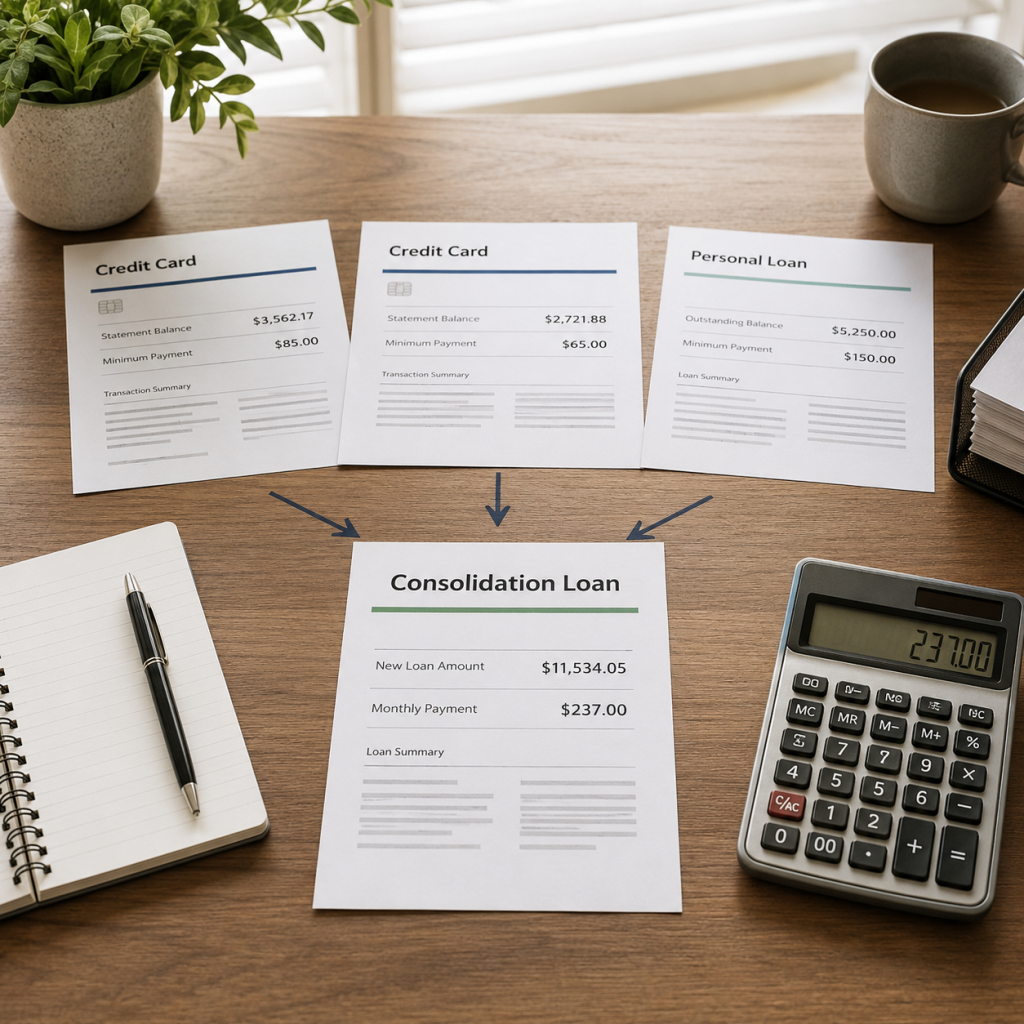
Debt consolidation sounds simple until you make a list of everything you owe. Which debts can you consolidate depends on the type of debt, its current cost, and whether the new loan actually improves the repayment terms.
A credit card balance may be an obvious candidate. Medical bills, personal loans, collection accounts, student loans, and secured debts require more thought because they do not all behave the same way.
The first rule is straightforward: a debt should not be moved into a new loan because the lender allows it. The new arrangement should improve the cost, repayment structure, or manageability of the debt.
If you are still reviewing the basics, our guide to what debt consolidation is and how it works explains how a consolidation loan can replace several existing balances with a new repayment obligation.
Credit Card Balances Are the Most Straightforward Starting Point
Credit card debt is one of the most common reasons borrowers consider consolidation. A fixed installment loan can replace multiple revolving balances with one scheduled payment.
The Consumer Financial Protection Bureau explains that debt consolidation loans can convert multiple debts into one payment and notes that they may offer a lower interest rate than existing balances. The lower rate is possible, but not guaranteed.
Before moving a card balance, compare its current APR with the new loan’s APR and fees. Also consider how long you expect the balance to remain if you keep paying the card.
Consolidating a card and then rebuilding the card balance can leave you with more debt than before.
If you are deciding between a loan and another way to combine card balances, our comparison of a debt consolidation loan vs. a balance transfer credit card explains the differences in rates, fees, repayment structure, and promotional periods.
Existing Personal Loans May Be Included, but Check the Math
A borrower with several installment loans may want to replace them with one new personal loan.
Simplifying due dates might be possible, but someone may have already made partial payments on existing loans. Starting a new three- or five-year term can stretch repayment far beyond the original schedule.
Compare each payoff balance with the new loan’s total repayment. Do not compare only the old and new monthly payments.
If one existing loan already has a low rate and only a few payments remaining, leaving it alone may be more economical.
When comparing possible consolidation loans, our guide on how to compare debt consolidation loan offers covers APR, origination fees, repayment terms, net proceeds, and total repayment.
Medical Bills Deserve a Separate Review Before You Borrow
An unpaid medical bill is different from a typical credit card balance.
Before converting a medical bill into interest-bearing debt, check whether the provider offers financial assistance, charity care, or a direct payment plan. The CFPB advises consumers to review financial assistance and insurance coverage before using medical credit products or financing.
If a medical balance has already become a credit account or other financing obligation, a consolidation lender may allow the proceeds to be used for payoff, depending on its rules.
But moving a zero-interest provider payment plan into a high-interest personal loan would make the debt more expensive, even if the new payment feels more convenient.

Collection Accounts Need Verification Before Consolidation
A collection account should not be paid from new loan proceeds until you know what the debt is and how much is actually owed.
Verify the original creditor, current collector, balance, and account status first. If appropriate, ask for written information about the debt.
The CFPB recommends verifying the debt and the debt collector before agreeing to pay or negotiate.
In some situations, negotiating may produce a different result than taking a new loan to pay the full collection balance.
Do the verification before borrowing, not after.
High-Cost Short-Term Debt Can Look Like an Obvious Target
Replacing a very expensive short-term loan with a longer installment loan can appear attractive because the new payment may be smaller.
That does not mean the replacement loan is affordable.
A borrower who is already struggling with a short-term loan may also receive poor terms on a new consolidation loan. Check the APR, fees, term, and total repayment before assuming the refinancing solves the problem.
The important question is whether the debt becomes less expensive and easier to repay, rather than being moved to a later due date.
Borrowers with weaker credit may also want to review our guide on getting a debt consolidation loan with bad credit before assuming consolidation will produce better terms.
Federal Student Loans Belong in Their Own Category
Federal student loans should not be treated like ordinary credit card debt.
The U.S. Department of Education offers Direct Consolidation Loans for eligible federal student loans. This combines federal loans into a single federal loan and one monthly payment.
That is different from refinancing federal student loans into a private loan. Federal Student Aid explains important considerations before consolidating federal student loans, including changes to the repayment period, interest costs, and the terms of the new Direct Consolidation Loan.
If federal loans are involved, review federal consolidation and repayment options before replacing them with private debt.
Private Student Loans Are Another Decision
Private student loans may sometimes be refinanced through a private lender.
This is closer to a traditional refinancing decision: compare the existing rate and terms with the new offer.
Do not mix the analysis with federal loan benefits. A borrower with both federal and private student loans may decide to treat the two groups differently.
Keeping those categories separate makes the comparison much clearer.
Auto Loans and Mortgages Are Secured Debts
A car loan or mortgage is backed by collateral.
These debts are commonly handled through refinancing rather than being folded into an ordinary unsecured consolidation loan.
The collateral changes the risk. With home-secured borrowing, the CFPB warns that using home equity to pay credit card debt can put the home at risk if the new loan cannot be repaid.
A lower rate is not enough reason to turn unsecured debt into debt secured by an important asset.
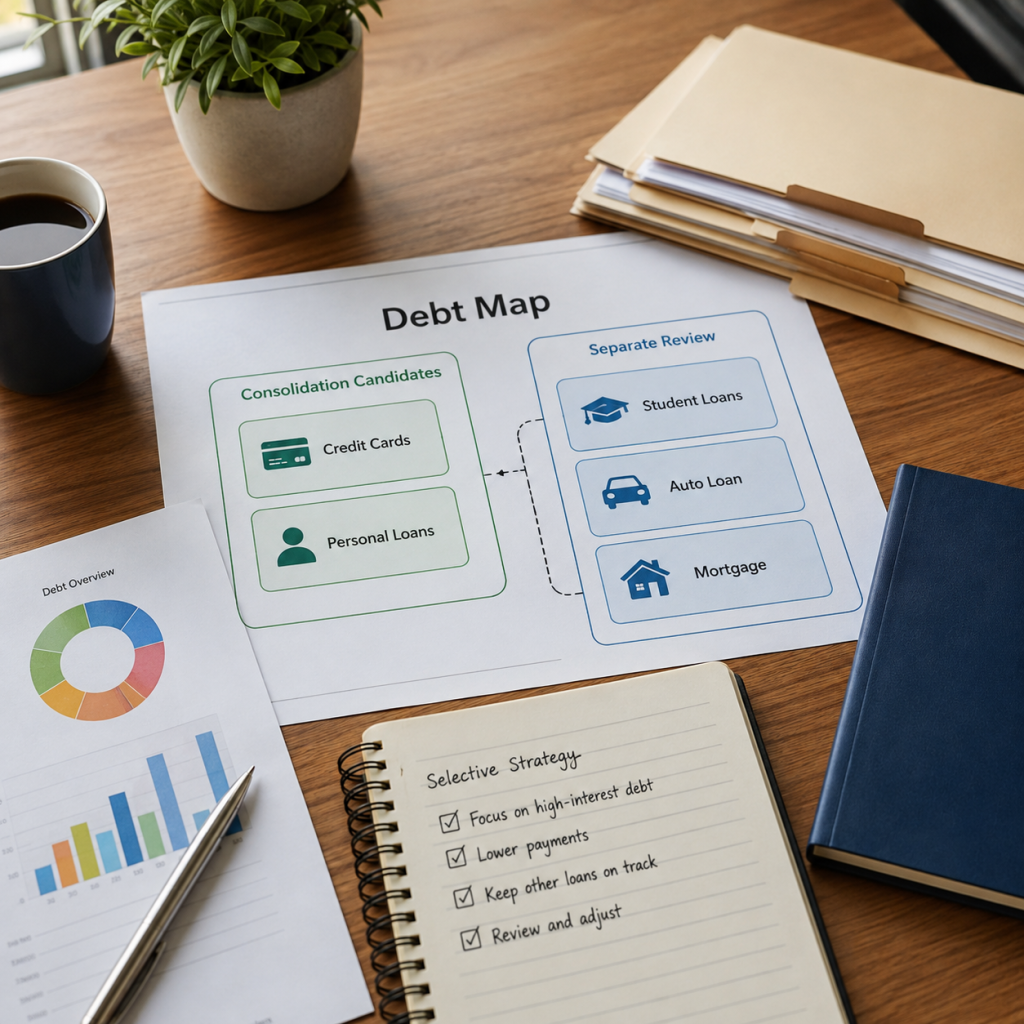
Which Debts Can You Consolidate—and Which Should You Leave Alone?
Not every debt belongs in the consolidation basket.
An interest-free medical payment plan, low-rate promotional balance, subsidized federal student loan arrangement, or loan that is almost paid off may have features you would lose by replacing it.
This is where selective consolidation can make more sense than consolidating everything.
Perhaps three high-interest cards should move into the new loan while one low-rate account stays where it is.
The word “consolidation” does not require every balance to be included.
Build a Debt Map Before Applying
Write down each debt with its:
- Payoff balance
- APR or interest rate
- Monthly payment
- Remaining term
- Fees
- Collateral
- Special protections or benefits
Then compare those figures with the proposed consolidation loan.
This simple exercise often shows which debts are expensive enough to move and which ones should remain untouched.
The Best Consolidation Plan Is Often Selective
Debt consolidation works best when it solves a clearly identified problem.
Maybe the problem is three credit cards above 20% APR. Maybe there are too many due dates. Maybe it is a variable revolving balance that never seems to fall.
Those are specific problems.
“Put everything into one loan” is not a strategy by itself.
Choose the debts based on what the new loan improves.