
Can you get a debt consolidation loan with bad credit? You might be able to get one, but approval isn’t guaranteed. Even when a loan is available, the APR and fees may be too high to provide real savings.
Debt consolidation should make repayment easier or reduce costs. It may also create a payment that fits the budget. A loan that costs more than the current debts may combine the bills without saving money.
Before applying, compare the new loan with your current debts. If you have bad credit, also consider other options before taking out a new loan.
What Does Bad Credit Mean to a Lender?
There is no fixed score that all lenders consider bad credit. Each lender uses its own scoring model and approval rules.
A lender may review:
- Credit scores
- Payment history
- Current debt balances
- Credit card utilization
- Recent credit applications
- Income
- Employment information
- Monthly housing costs
- Debt-to-income ratio
- Bank account information
- Previous delinquencies or collections
Although a credit score matters, it is only one part of the decision. A borrower with a stable income and manageable monthly debts may receive better terms than someone with the same score and a heavier debt burden. For a closer look at the application process, review our guide to personal loan requirements and what lenders check before approval.

Why Bad Credit Can Make Consolidation More Difficult
Lenders review your credit and finances to judge how likely you are to repay the loan. Late payments, high balances, or defaults may result in:
- A higher APR
- A smaller loan amount
- A shorter or less flexible term
- An origination fee
- A secured loan
- A requirement for a co-borrower
- No approval
If the consolidation loan is too expensive, it may not solve the original problem. The borrower might pay more after adding fees when the new APR is similar to or higher than the existing rates.
For that reason, the loan should be evaluated as a complete repayment plan, not simply as a way to receive one monthly bill.
Check Your Credit Reports Before Applying
Before applying, review the information in your credit report. You can request reports through AnnualCreditReport.com, the federally authorized source for free credit reports.
Check for:
- Accounts that do not belong to you
- Incorrect balances
- Payments reported as late when they were made on time
- Duplicate collection accounts
- Outdated personal information
- Accounts that should show a zero balance
- Signs of possible identity theft
Errors on your credit report can hurt your application, so review each report before you apply. You cannot remove a correct late payment or collection simply because it lowers your score. However, you can dispute any record that is wrong or incomplete.
In addition, checking your own credit report is generally treated as a soft inquiry and does not affect your credit score.
List the Debts You Want to Consolidate
Create a list showing the balance, APR, minimum payment, and status of every debt.
Separate debts that are current from those with missed payments or collection activity. Even if the loan pays them off, past late payments and other negative records may remain on the credit report.
In some cases, lenders may restrict the debts that loan proceeds can pay.
As a result, understanding the total balance helps prevent two common mistakes: borrowing too little or borrowing more than necessary.
How to Compare a Debt Consolidation Loan With Bad Credit
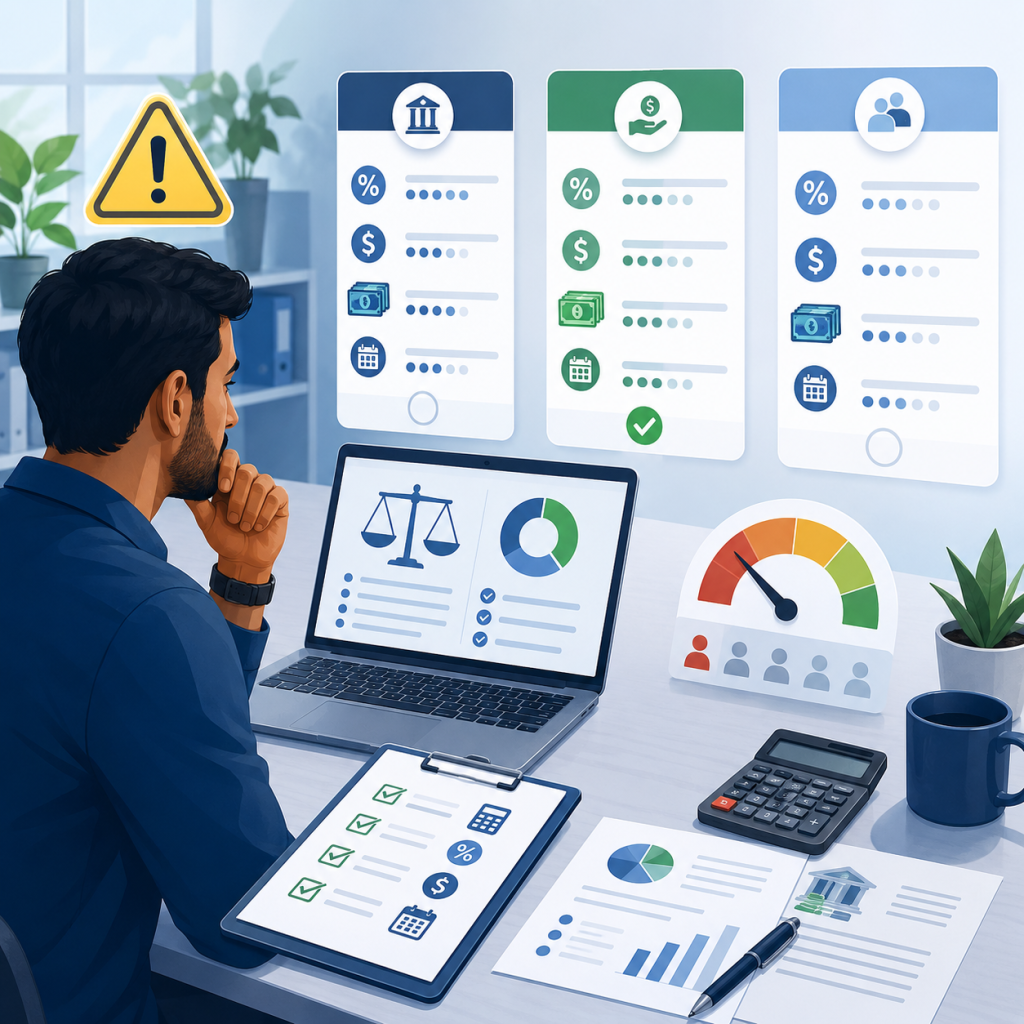
A borrower with bad credit may receive an offer that reduces the monthly payment but increases the total cost.
Compare:
- The new APR
- The loan fees
- The amount actually received
- The monthly payment
- The number of payments
- The total repayment amount
- The cost of leaving the current debts unchanged
A lower payment may help, but the borrower should understand why it is lower. A longer loan term can increase the total interest paid.
Ultimately, the new loan should reduce costs, create a sustainable payment plan, or provide another clear benefit. Our guide on how to compare personal loan offers explains how APR, fees, monthly payments, and repayment terms affect the total cost.
Consider Prequalification
If a lender offers prequalification, borrowers may review possible terms before submitting a full application.
Prequalification lets you compare possible APRs, loan amounts, and payments before you apply. First, check whether the lender uses a soft or hard credit inquiry. Keep in mind that the offer may change after the lender reviews your income, credit, and documents.
Above all, never report false income, employment, housing, identity, or banking information to improve the chance of approval.
Apply With a Co-Borrower or Co-Signer Carefully
Some lenders allow another person to join the application.
A co-borrower shares responsibility for the loan and may also receive or benefit from the funds.
A co-signer agrees to repay the debt if the primary borrower does not.
Missed payments may hurt both people’s credit. The co-borrower or co-signer may also have to pay the unpaid balance and collection costs.
Adding another person may improve the chance of approval or lead to better terms. However, it can create financial stress and strain the relationship. Review the agreement prior to signing.
Secured Debt Consolidation Loans
To qualify for a secured loan, the borrower must pledge an asset. Depending on the lender, this may be savings, a vehicle, or other property.
Collateral may help some borrowers qualify or obtain a lower rate. If borrowers do not repay the loan according to the agreement, lenders might seize the asset.
However, using home equity to pay credit card debt requires particular caution. It replaces unsecured balances with debt connected to the home.
A lower interest rate does not remove the collateral risk. Borrowers should consider what would happen if income decreased or an emergency made the payment unaffordable.
Credit Unions and Other Lenders
Banks, credit unions, online lenders, and installment lenders may offer personal loans for debt consolidation. The Consumer Financial Protection Bureau also outlines factors to review when considering a debt consolidation loan.
Although credit unions may use different lending standards, borrowers may need to meet membership and eligibility rules. Online lenders can make comparison convenient, although their rates and fees vary widely.
Avoid assuming that a lender specializes in bad credit because the application appears easy. Review the final APR, fees, repayment schedule, and lender information before providing sensitive documents or signing an agreement.
Warning Signs of a Bad Offer
Be cautious when a company:
- Guarantees approval before reviewing the application
- Promises a specific credit score increase
- Claims that debt can disappear without repayment
- Avoids disclosing an APR
- Demands payment before providing a loan
- Requests payment through gift cards or unusual transfers
- Pressures the borrower to sign immediately
- Encourages false information on the application
- Describes debt settlement as a consolidation loan
- Tells the borrower to stop communicating with creditors without explaining the consequences
By contrast, a real lender may charge legitimate fees, but the agreement should clearly disclose all costs and repayment terms. The Federal Trade Commission’s advance-fee loan guidance explains why guaranteed approval and demands for upfront payment are warning signs. A borrower should not have to guess how the loan works.

Alternatives When the Loan Is Too Expensive
When a consolidation loan is too expensive, other options may be more suitable.
Contact Existing Creditors
A creditor may be willing to discuss a payment plan, a different due date, a temporary hardship option, or another account arrangement. Even though options vary, contacting the creditor before missing more payments may be useful.
Work With a Nonprofit Credit Counselor
A credit counselor can review the borrower’s budget and debts. In some cases, the counselor may help establish a debt management plan involving one monthly payment distributed to participating creditors.
A debt management plan is not a new consolidation loan. It may also require changes to the borrower’s credit card accounts. The CFPB explains the differences between credit counseling, debt settlement, debt consolidation, and credit repair.
Use a Focused Repayment Method
When the borrower can cover all minimum payments, they can choose to direct extra money toward one debt at a time.
The highest-interest method targets the most expensive balance first. The smallest-balance method focuses on eliminating individual accounts more quickly. The better method is the one the borrower can follow consistently.
Adjust the Requested Loan Amount
A borrower may not need to consolidate every account. Paying only the highest-rate balances with a lower-cost loan could be more effective than replacing debts that already have reasonable terms.
Improve the Application Position
Before applying, consider whether a short preparation period could improve the available terms.
Useful steps may include:
- Correcting credit report errors
- Making all payments on time
- Reducing credit card balances
- Avoiding unnecessary new applications
- Gathering income documents
- Calculating an affordable payment
- Requesting only the amount needed
- Comparing offers from more than one source
Although these steps cannot guarantee approval or a specific rate, they may help borrowers prepare a stronger application and compare offers more effectively.
A Loan Should Improve the Repayment Plan
A debt consolidation loan with bad credit may be available, but availability is not the same as affordability.
First, review the offered APR, fees, term, monthly payment, and total repayment amount. Then compare those figures with the current debts and consider the risks of collateral or another borrower.
When a new loan does not lower costs or create a sustainable payment, negotiating with creditors or consulting a reputable nonprofit credit counselor may be safer than adding another expensive account.